York never seems to disappoint. We lived in England in the late ’80s and have visited York more times than I can count. The history associated with this city is fascinating. Just the name itself carries heritage and a namesake. The Romans called it “Eboracum,” the Vikings named it “Jorvik,” and when the English acquired New Amsterdam from the Netherlands, they renamed the city New York in honor of the City of York.
We’ve participated in ghost walks through the city streets, where Roman soldiers are still said to be seen and heard marching on ancient Roman roads, now buried several feet under the existing city. Witnesses claim they only saw the upper torso of the soldiers as they marched along.
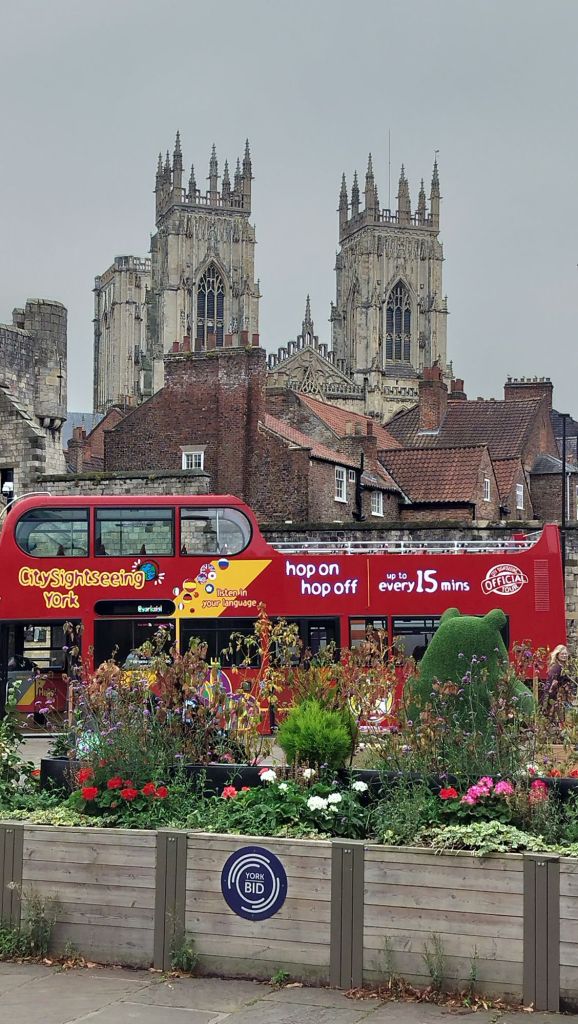
The Minster, York Cathedral, towers over the city center, sitting on the remains of a Roman fort. We’ve listened to organ practices, gazed up at the beautiful rose window, and admired one of the most ancient sets of stained glass windows in all of England. We’ve toured the rooftop and walked through the undercroft, where the foundations of that ancient Roman fort can be seen.
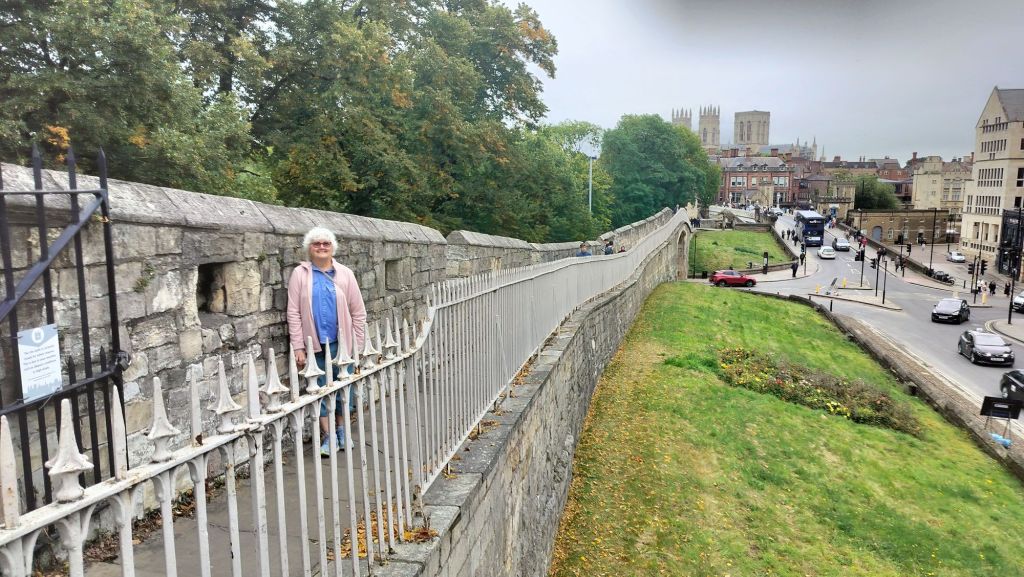
We’ve strolled through the Shambles, walked its ancient walls, and visited Clifford’s Tower. We’ve toured the Jorvik Viking exhibit, a multisensory experience that takes you through a reenactment of a Viking village, discovered and unearthed during city construction. We’ve even taken a cruise on the River Ouse (pronounced “ooz”) and attended a reenactment of the Viking invasion. This consisted of a Viking-ish boat, complete with a serpent head and tail, a robust lady in a horned helmet, her leather-clad partner bearing a sword, shield, and helmet, and a few rowers. Needless to say, York seemed safe from a second invasion!
We’ve traveled to York by bus, car, and train. This past spring, we took our grandson by train to visit the National Railway Museum, which includes hands-on exhibits in the Wonderlab, teaching both youngsters and oldsters alike all kinds of science facts through fun activities.
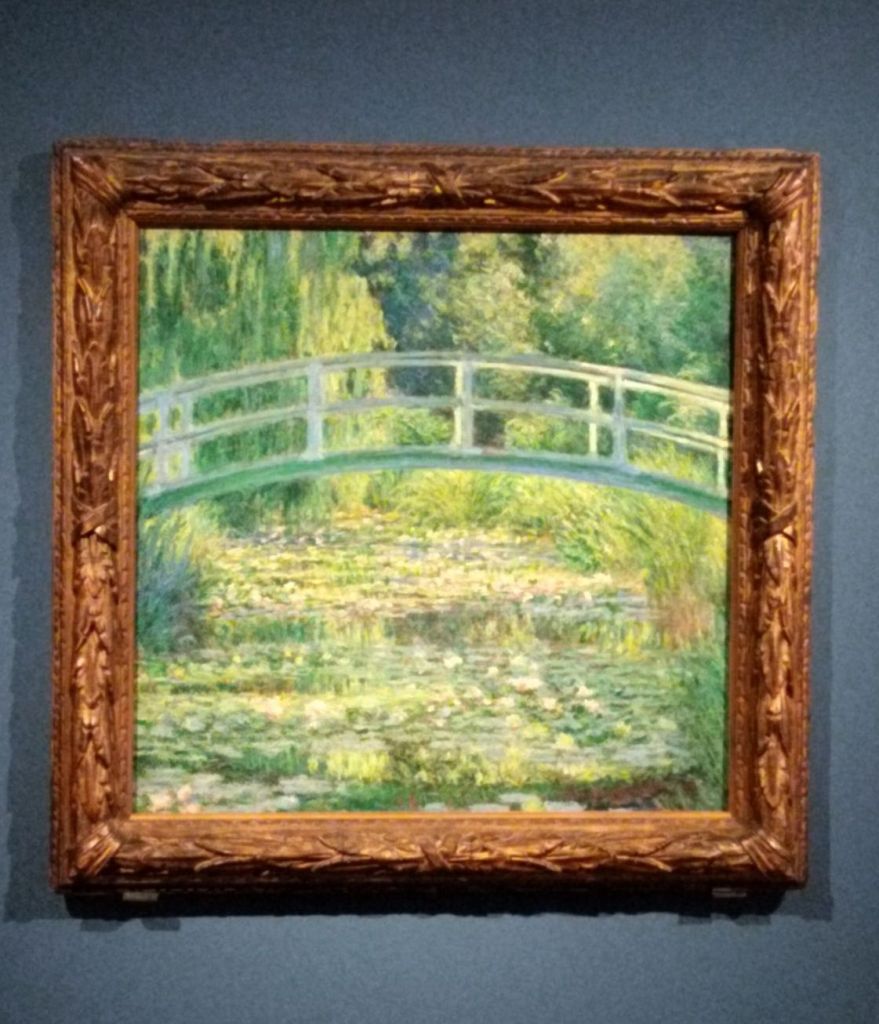
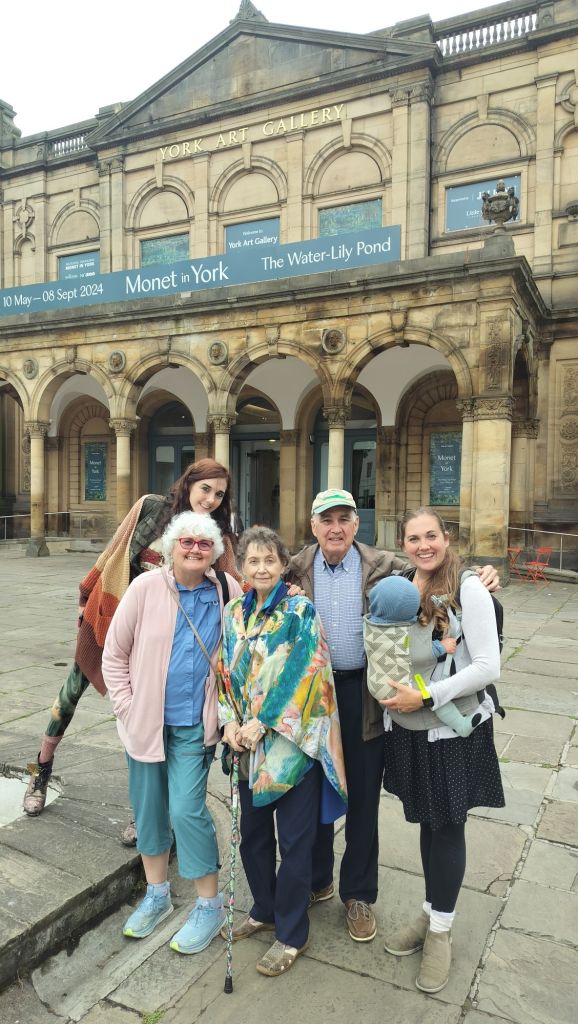
This trip, we visited the York Art Gallery, a first for us. Jack and Jane, my in-laws, are fans of the Impressionist movement, and it just so happened there was an exhibit of Impressionist painters, including Monet’s The Water Lily Pond.
Now, I’m not an art connoisseur or critic. Most of my painting appreciation has been with a roller and brush used to apply one color generously to the walls of our home. Still, I do enjoy walking through art exhibits. One of my earliest appreciations was The Voyage of Life by Thomas Cole, which is in the Smithsonian National Art Gallery in Washington, D.C. His exhibit displays the voyage of a child, adolescent, and man charting his course through life on four gargantuan canvases that fill an entire room. This was not the case with Monet.
“If you find a Pissarro, let me know,” Jane asked.
“Who’s Pissarro?” I replied.
“He’s considered the father of the Impressionist movement. He’s one of my favorites.”
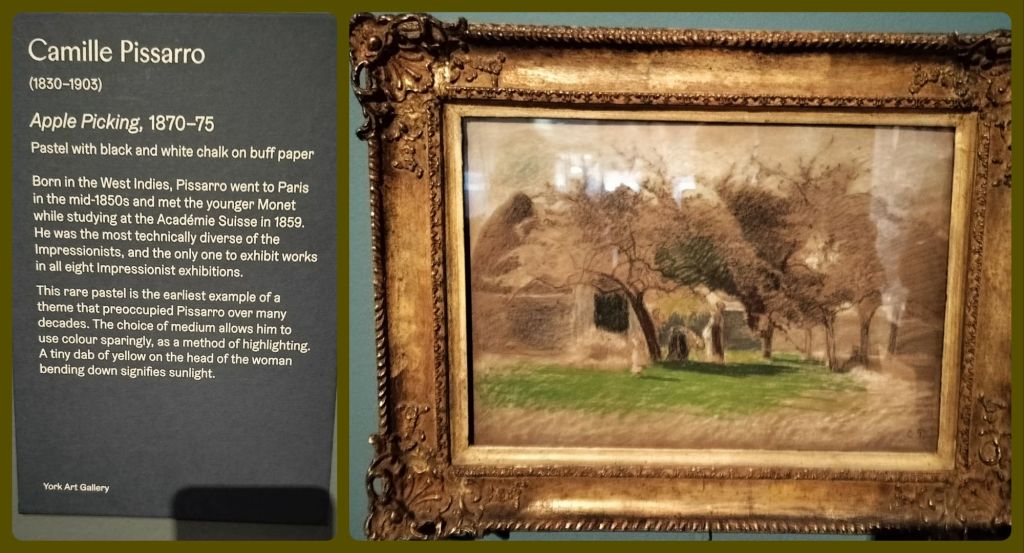
A little later, Jane came back to tell me there was indeed a Pissarro at the end of the aisle of paintings. Pretty cool. I reckon it would’ve been anticlimactic if he wasn’t included.
There was a lot of hype leading up to Monet’s painting, including works by other artists who influenced Monet, as well as those he influenced. What struck me was how accessible the artwork was. You could walk up very close to the paintings, lean in—sometimes inches away—though, of course, touching the masterpieces was off-limits.
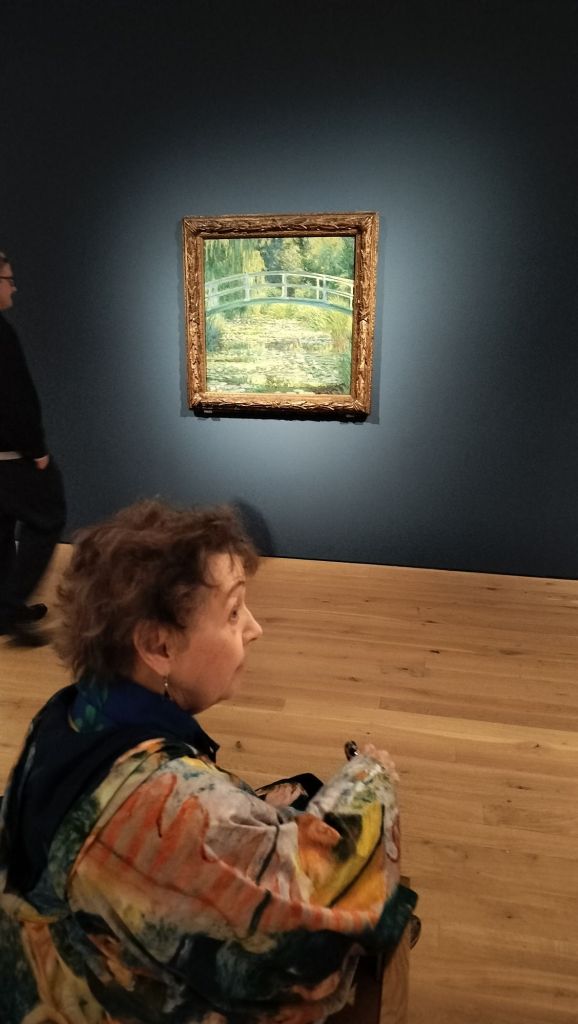
Monet’s The Water Lily Pond was displayed on the center of a deep blue wall, similar to the color I used for an accent wall in our living room. The color was probably intentionally selected to pull out the blues on the bridge. It was illuminated from above, also intentionally, I’m sure. A bench sat about ten feet back in the not-quite-middle of the room. From that distance, the painting appeared smooth, the colors blending softly into one another. No sharp lines, just soft hues creating implied shapes that the mind fills in—immediately revealing a humped bridge, water bordered by grasses, and a pond teeming with lilies.
I noticed folks getting closer to the painting, so I took that as my cue. There were no ropes around this piece. As I approached, something became immediately clear: this painting was not at all as smooth as it appeared from a distance. I took a photo (you’re allowed, as long as you don’t use a flash!). The surface was full of paint—thick layers upon thick layers. The technical term, I learned from watching Baumgartner Restoration YouTube videos, is “impasto.” Monet was very generous with his paint! You could lose yourself in the textures and colors. Taking a photo that captured the impasto was tricky—I tried from various angles until a friendly guard encouraged me to step back.
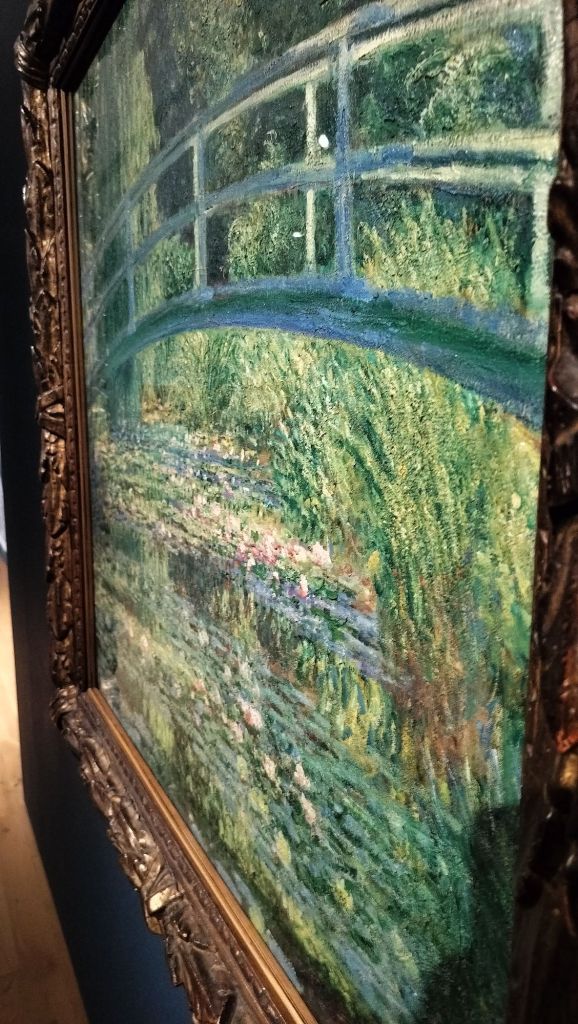
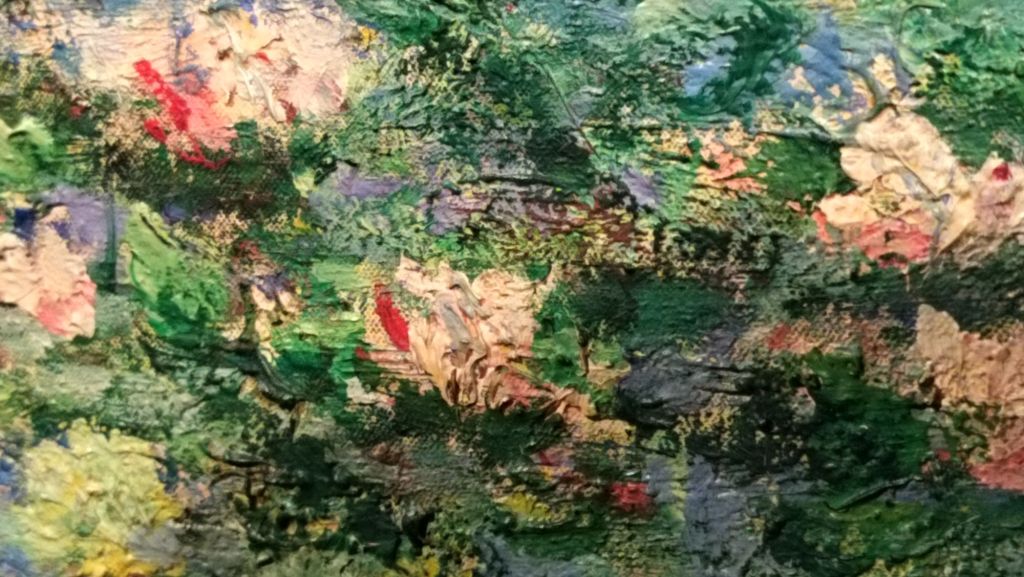
I got a couple of snaps, one of a water lily and another of the grasses on the bank. Up close, you can see the thick layers of paint and even the canvas weave showing through (how did Monet miss that?). The grasses were particularly striking, with three-dimensional paint building each blade, shadowed in blacks and browns on the underside, and bright touches reflecting sunlight on top. Though the painting isn’t large, I reckon Monet used as much paint as Thomas Cole did on one of his massive canvases.
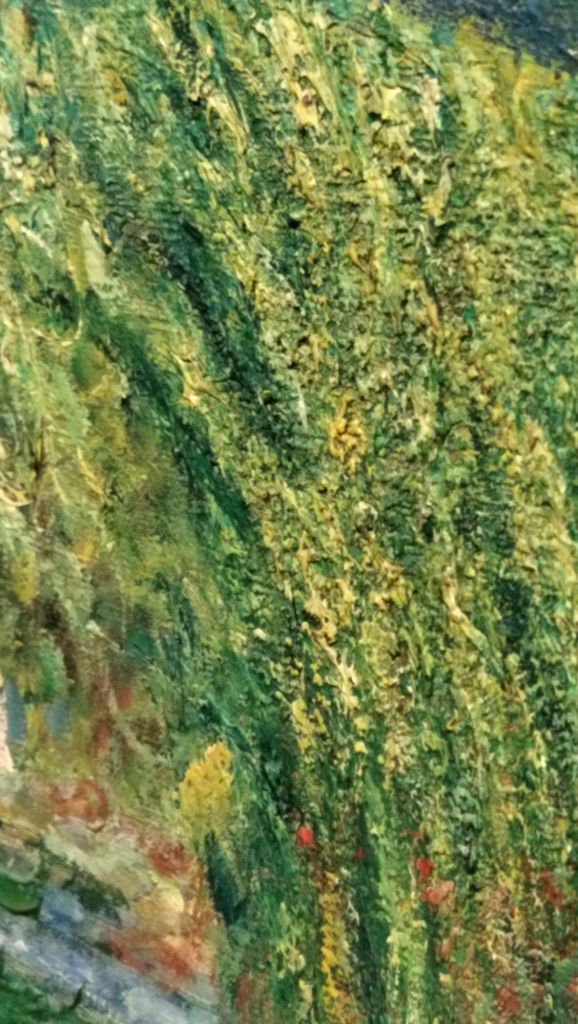
The exhibit was impressive and I left impressed and inspired to experiment more with painting. I’ve dabbled with acrylics before but never oils—maybe a class is in my future. What creative outlets have you considered? What styles of art touch your soul.
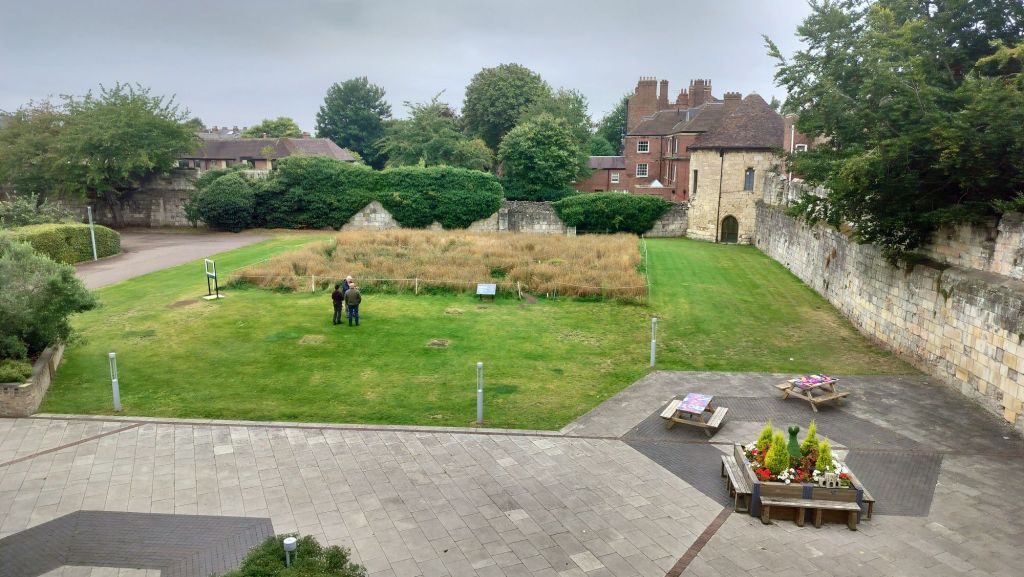
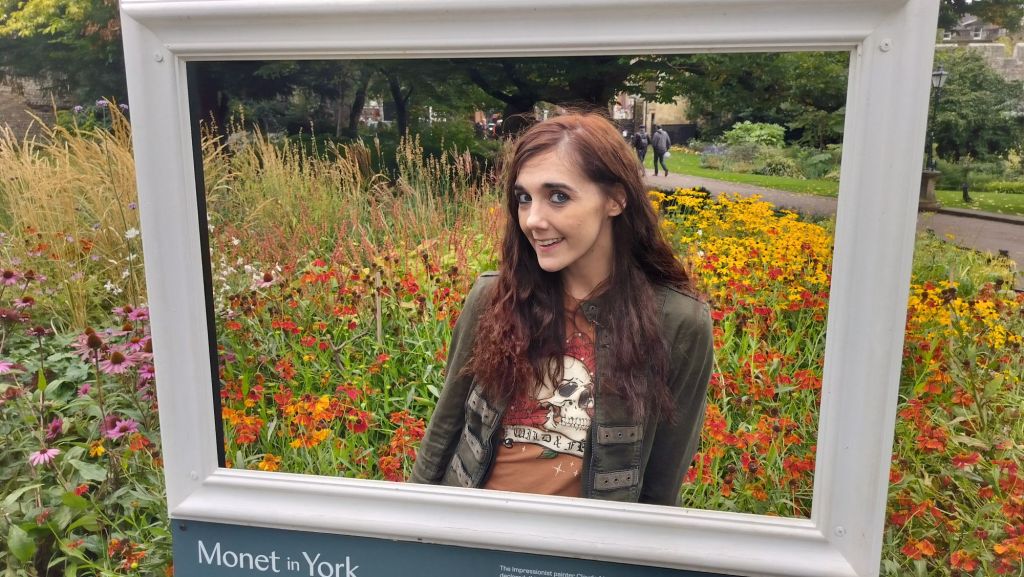
The museum also has an outdoor wildflower garden, which looked a bit spent in the early fall weather. But further back, another garden walk in a more protected area offered further inspiration.
We closed our time as every great adventure should, hot chocolate at the local Coco Jos which was just down from the York Art Gallery.

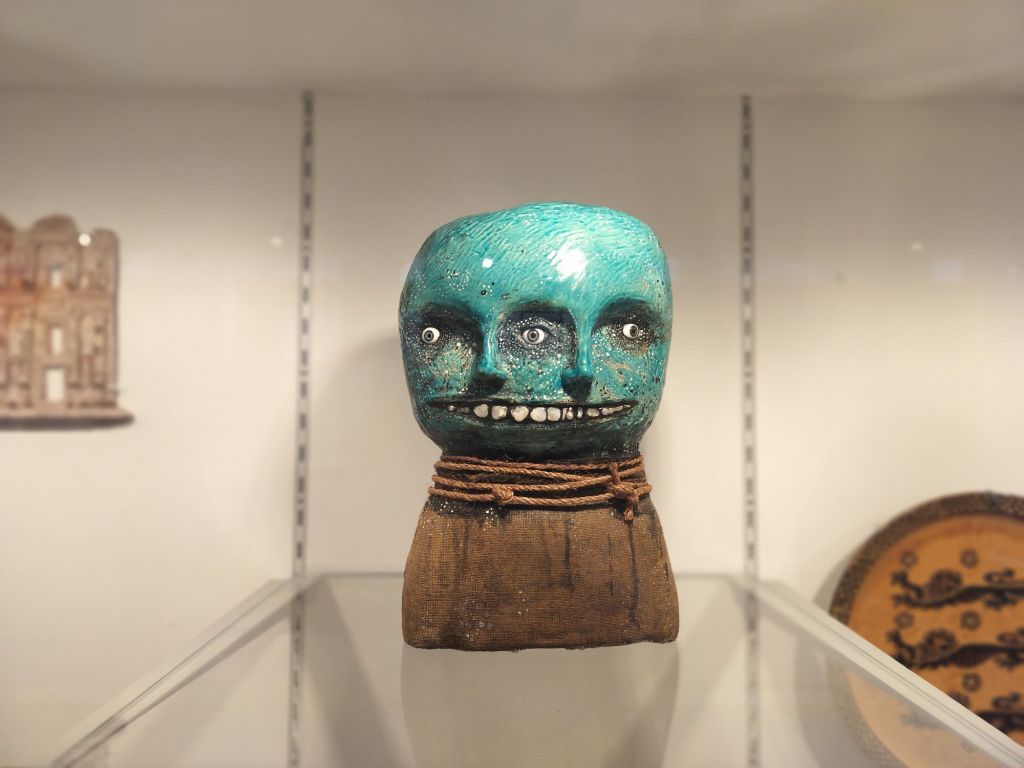


 So(ul)journ!
Leave a reply to mrstran1110 Cancel reply