
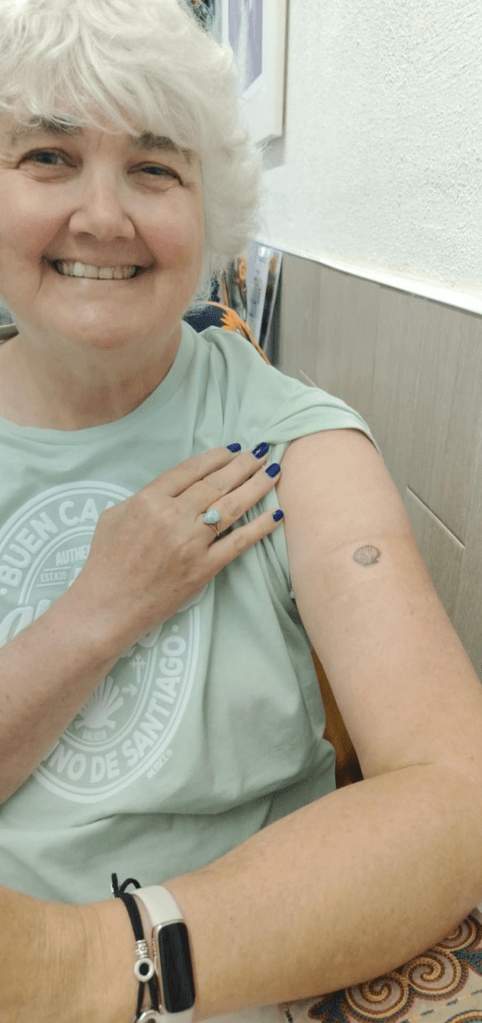
It’s been eight days since our trek on the Camino began, and now we’re on the train bound for Harrogate. Reflecting on walking the Portuguese Coastal Route of the Camino, it’s challenging to bring a sense of benediction to the journey. Yesterday, around this time, we stood in the Praza do Obradoiro, taking selfies with Santiago de Compostela Cathedral in the background. We had arrived at the zero marker for the cathedral, having started our journey 129 km away in Baiona, Spain. Obviously, we were happy to arrive. We had our final stamps to collect, our Compostela certificate, our distance certificate, souvenirs, and, of course, a T-shirt. Jacki headed off to get a tattoo. I’ll sort mine out when I get home (I’ve got an artist I’m pleased with) as the design has eluded me so far. I also planned to attend the Pilgrim’s Mass at noon.
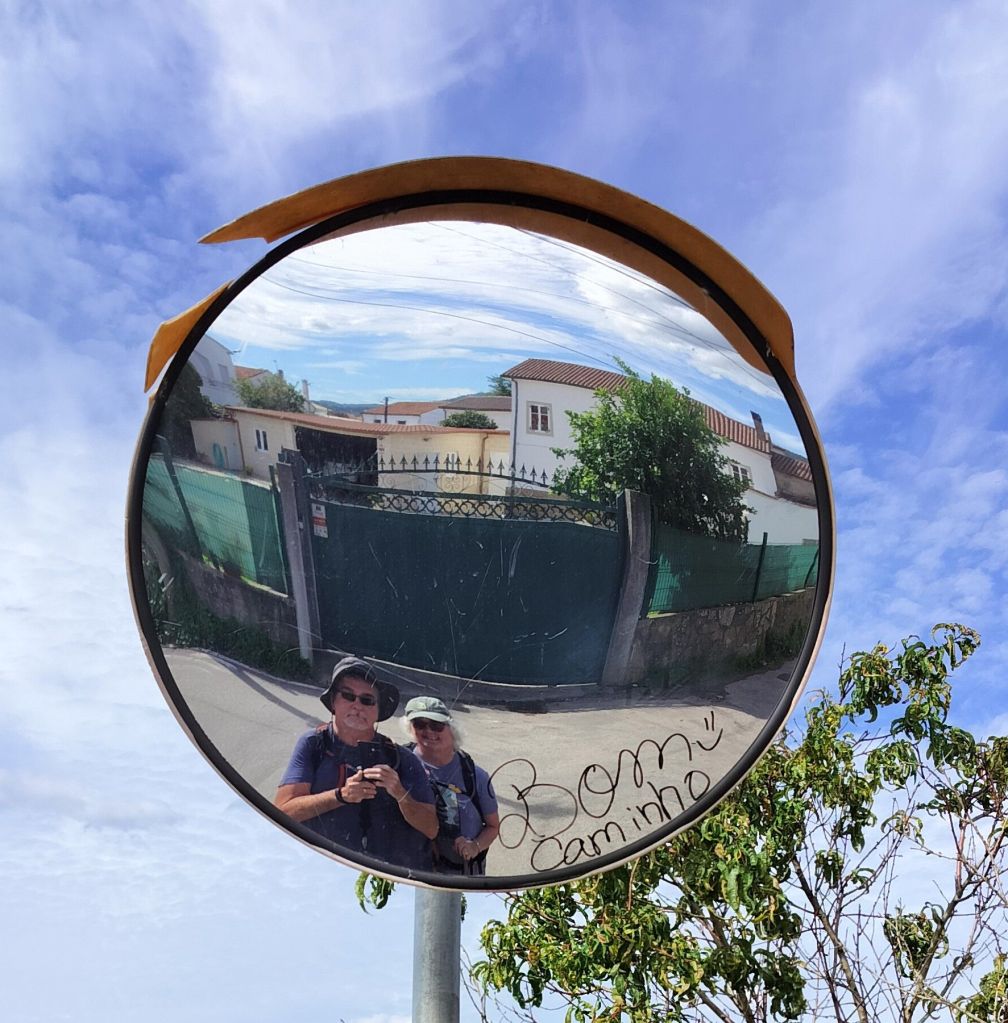
As I reflect on the past eight days, there are many things to celebrate. We met a lot of people along the way—pilgrims we frequently ran into day after day. Not everyone stayed in the same accommodations; we opted for hotels, which provided us with a private room, bathroom, and breakfast. Others stayed in pilgrim hostels or “albergues.” These accommodations range from bunk beds to private rooms for a little extra. The people we met came from many different nations, speaking various levels of English. It wasn’t unusual to hear several languages at any given moment. The phrase commonly uttered by passerby and pilgrims alike is “Buen Camino,” a wish for a good journey. “Buen días” was also a frequent greeting. Regardless of our enthusiasm or fatigue, exchanging these words with others created a meaningful human connection amid the cacophony of languages. People were often identified by their place of origin rather than their name: Arkansas, Texas, St. Louis, Denmark, Belgium, Canada, Florida—and we were known as Maryland. Jacki is better with names, but I kind of liked referring to people by their origins. All of us were converging toward Santiago de Compostela, and that was just on our route. Pilgrims come from France and many other routes throughout Spain. If you traced each path, it would look like a vast spider’s web, with each pilgrim’s journey drawing them closer to the center and closer to one another in Santiago de Compostela.
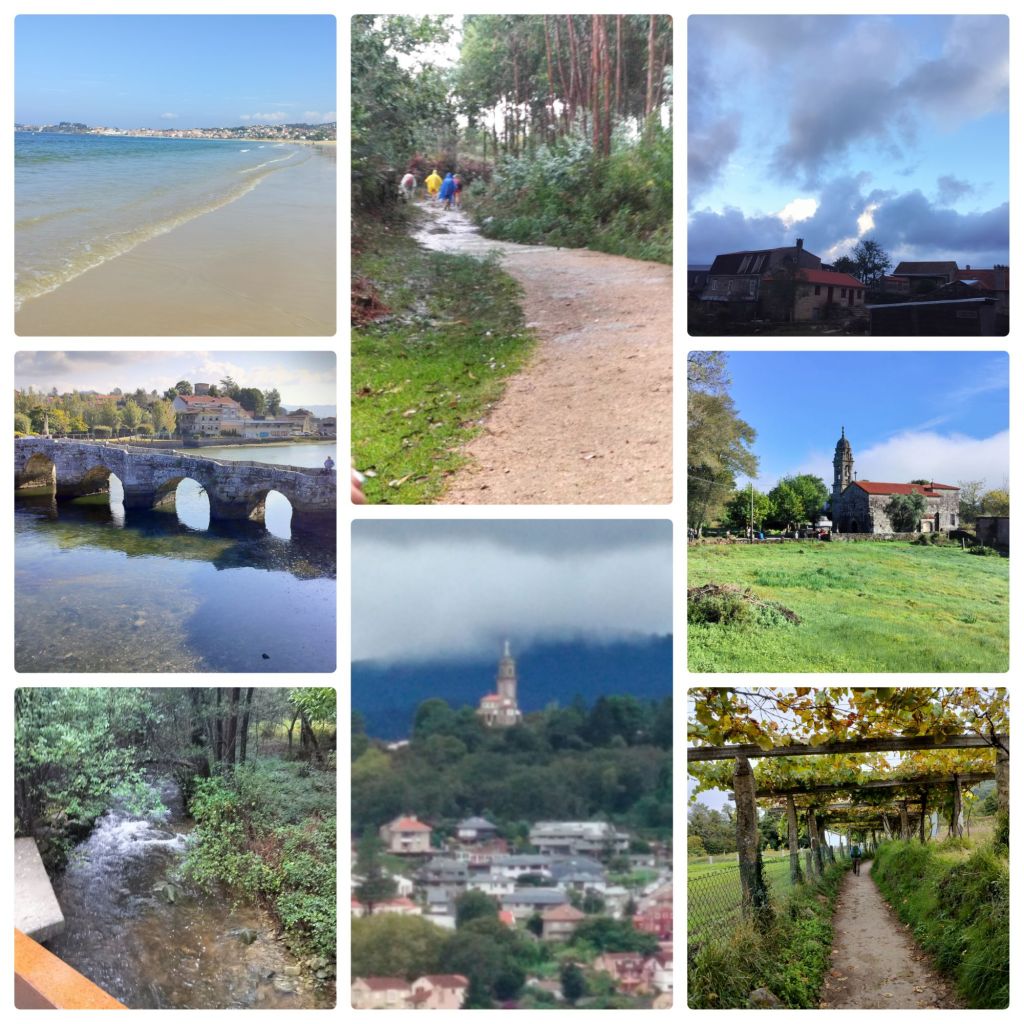
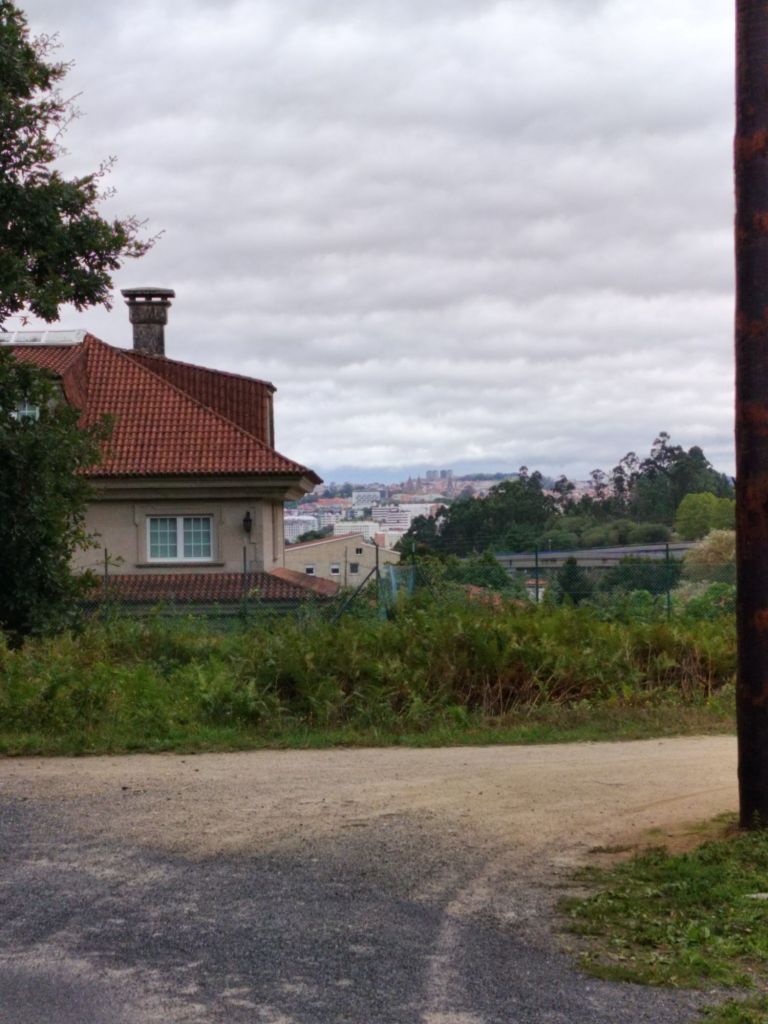
The scenery along the way was stunning! Our route began along the Atlantic beaches and harbors of Baiona and Nigrán. As we turned inland, we followed the Vigo River, walking along higher elevations that offered breathtaking views of Vigo, its harbors, islands, and bridges. The first of our long trekking days brought us to Arcade, and the weather turned abysmal. Thankfully, we came across a bar where one of the staff kindly called a taxi to take us the last four kilometers of that day. The taxi driver shared that the weather was expected to worsen, so our decision to stop was the right one. The following day, we walked to Pontevedra, passing through national forests as the terrain grew steeper. Each day involved climbing several hundred meters, then descending again. The mantra “What goes up must come down” held true, and the views from higher elevations were incredible. The final leg of our journey was the longest and most challenging, with steep climbs, but at one point, we could see Santiago de Compostela Cathedral in the distance. Exhausted but determined, we decided to finish the last stretch the next morning.
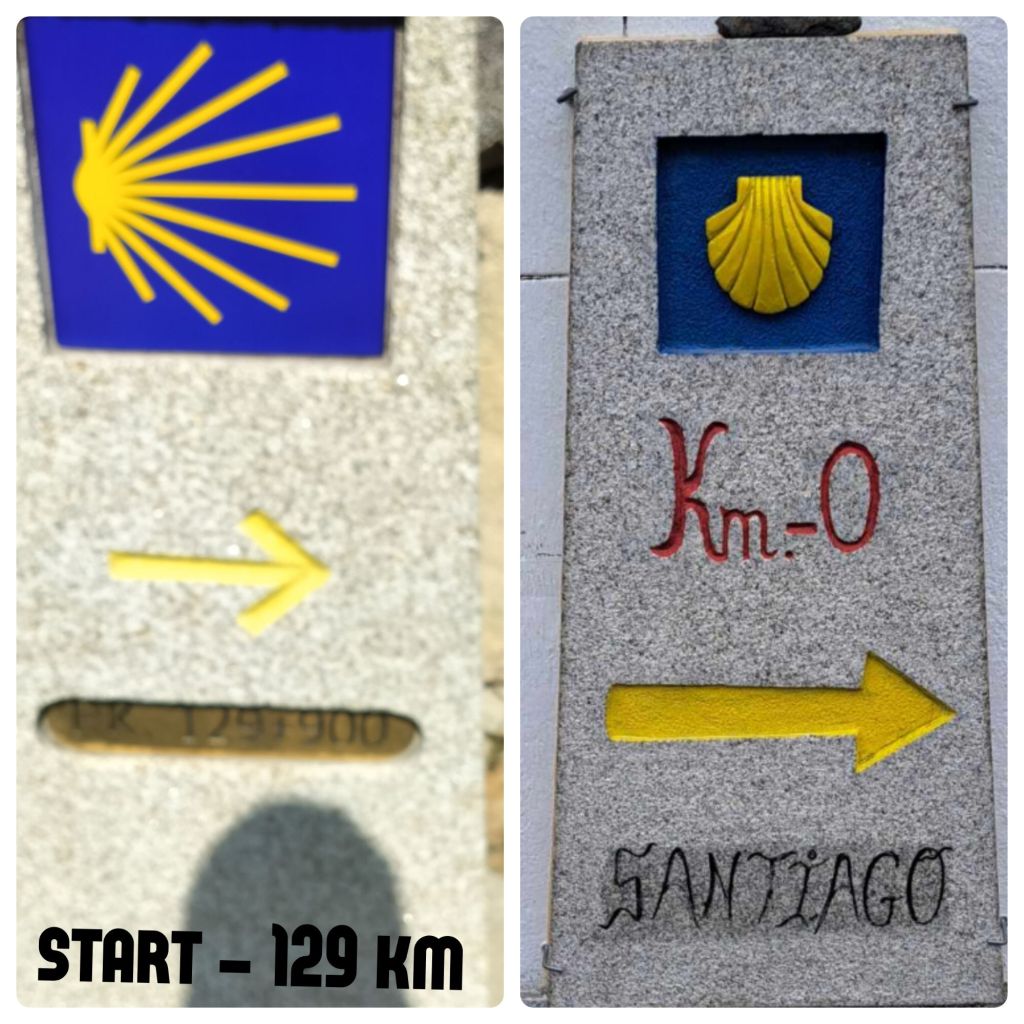
That was yesterday. Jacki had a tattoo appointment, while I went to get my final stamp and certificate; she would collect hers while I attended the Mass. The clerk informed me that I had walked a total of 128 km, making me eligible for the Compostela certificate. “Compostela” means “field of stars” as in the Milky Way and reflects one of the great number of pilgrims who have walked to Santiago de Compostela. Hearing that total was a reckoning for me, I know I walked it, and now someone affirmed it it—it made the pilgrimage feel complete. My next and last step was to attend the Pilgrim’s Mass, visit St James himself..

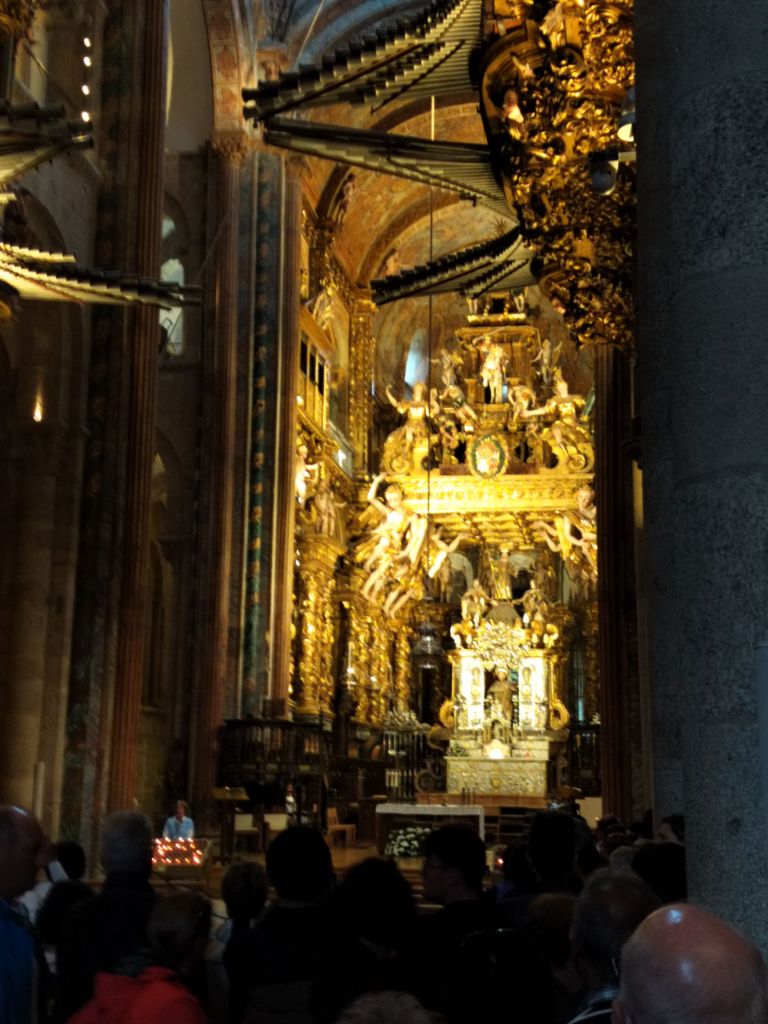
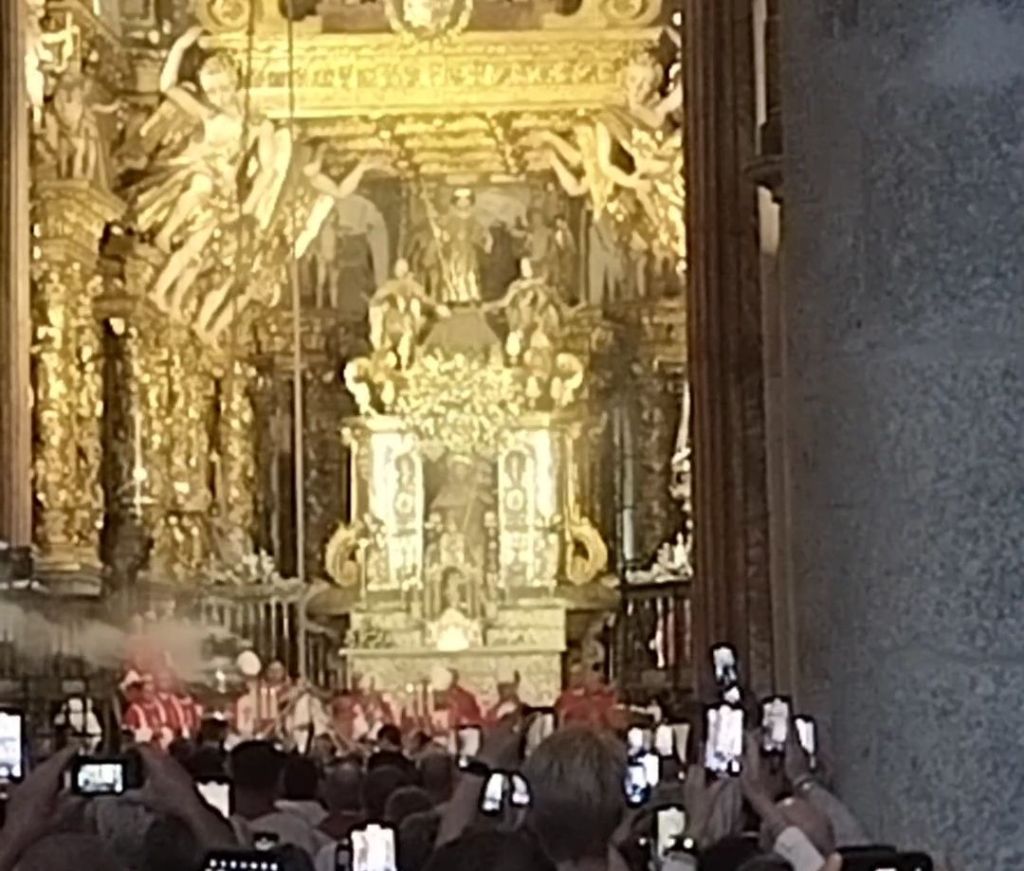
The Pilgrim’s Mass began promptly at noon. I stood beside one of the pillars along the central nave, offering a clear view of the high altar and the participants: cantor, lectors, and the archbishop, who presided over the service. The ceremony was grand, reminiscent of Christmas Eve Mass at the Vatican. The procession included seminarians, priests, bishops, and the archbishop, all in their white robes, red stoles, or chasubles, and tall hats. The cantor sang a selection I couldn’t identify, and though I don’t speak enough Spanish to understand the lyrics, the experience was profoundly spiritual. Perhaps it was the culmination of the last week, the exhaustion, or the reverence of the moment.
The archbishop welcomed the congregation, mentioning the thousands of pilgrims from many countries and celebrating their ministry (Jack tells me 2240 pilgrims arrived the day we did … That’s a lot of people for this time of year we’re told but that is a daily figure) The first reading was from the book of Job (chapters 1-2), a dialogue between God and the persecutor about Job’s faithfulness. As I listened, I reflected on our journey. Was this a test of endurance? At times, when my feet throbbed, my legs cramped, and blisters appeared, I wondered about the value of the pilgrimage. Was completing it something to be proud of? How did humility play a role in the Camino? The archbishop spoke repeatedly about “ministerio,” challenging us to see this not as the end of our pilgrimage but as a continuation of who we are called to be in service to God and the world as the path continues. I have no idea if that was his message, but that’s the message I choose to take away.
The service included the Nicene Creed and the Eucharist. As it concluded, the Botafumeiro, the large incense burner, was swung through the cathedral, filling the space with fragrant smoke. It was a fitting conclusion to this souljourn.
I am exceptionally grateful to have completed this pilgrimage. Jacki was a wonderful partner throughout. I’m impressed by her dedication, especially when I questioned the feasibility of certain segments. She pressed on at her slow and steady pace, always encouraging others and starting conversations along the way. A few days in, she asked if I would have preferred to do the pilgrimage alone. It’s an interesting question because, while I tend to be a bit of a loner and not the greatest conversationalist, there’s an undeniable aspect of the Camino that feels solitary. You’re in your head, battling physical discomfort and doubt, pushing through mile after mile. Even surrounded by others in the cathedral, there’s a sense that the experience is deeply personal—between you and God. But God also gives us companions for the journey. Without Jacki, the meals would have been lonelier, and I would have missed many of the waymarkers she spotted that kept us on the path. We partnered on this pilgrimage to see it through to the end. And while I may have questioned the wisdom of doing this walk at times, Jacki encouraged us forward, even walking the last 35 km on the most challenging portion. Though it was harder on her, she persevered. When I suggested another taxi, she resolutely said, “We’re walking to Santiago de Compostela.” And she put up with my moments of misery. So, for the record, I wouldn’t have wanted to do this alone—we completed this pilgrimage together. How cool is that?

Reflecting on the pilgrimage, I realize how hard it is to bring all of these thoughts and experiences together in a way that does them justice. The physical journey was challenging, but the spiritual journey continues to unfold. Perhaps in the days ahead, as memories settle and new insights surface, the meaning of it all will become clearer. For now, I carry with me the gratitude for the experience, the people we met, and the partnership that made this journey so memorable.
Buen Comino!
(for more photos of our Walk on the Comino, please connect to my Facebook page Souljournpm)


Leave a Reply