Early in the week, I determined that I wanted to visit some standing stone sites throughout the Yorkshire area. I soon discovered there are a lot of sites and so by week’s end I had an itinerary of those closest to home base and took to the road visiting Yorkshire and finding places that make you stop, look around, and wonder what on earth possessed people to build such extraordinary things here, sometimes in what appears to be the middle of nowhere.
Toward the end of the week, I stood among prehistoric stones planted on windswept hillsides, walked around enormous earthworks whose original purposes remain something of a mystery, visited a medieval cathedral that is still in use today, explored the ruins of a great abbey, and, quite by happenstance, visited a section of Hadrian’s Wall (that’s not in Yorkshire but I’ll explain that more in a bit.)
The people who built these places lived millennia, and in some cases centuries, apart from one another. They had different technologies, beliefs, ambitions, and challenges. Yet they all invested enormous effort in creating something they considered worth building.
I’ve found myself wondering about these people: what motivated them, what their lives were like, and what they might think of us wandering around their handiwork centuries or millennia later, cameras in hand, trying to make sense of it all.
Come along for a few adventures in the ancient landscapes of northern England and the Scottish Borders.
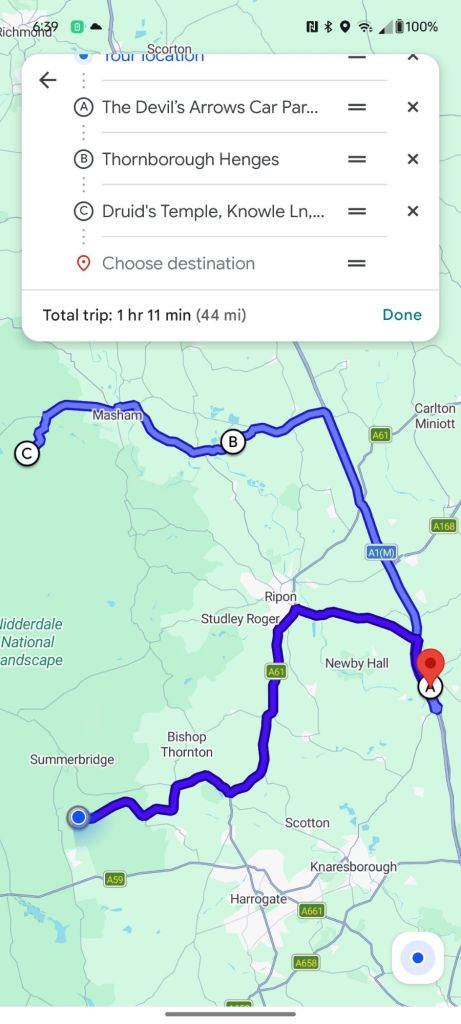
On Thursday, I ambitiously set out to visit four standing stone and henge sites on a loop through Yorkshire. These sites ranged from the Neolithic and Bronze Ages to one as recent as the late eighteenth century.
The Twelve Apostles Stone Circle
The Twelve Apostles Stone Circle sits on the crest of a hill in the Rombalds Moor upland area between Ilkley and Burley in Wharfedale, West Yorkshire. This site has been extensively investigated and, at times, modified by well-meaning conservationists. However, many of the stones remain in their original settings, where they were placed around 1900 BCE, during the Bronze Age.
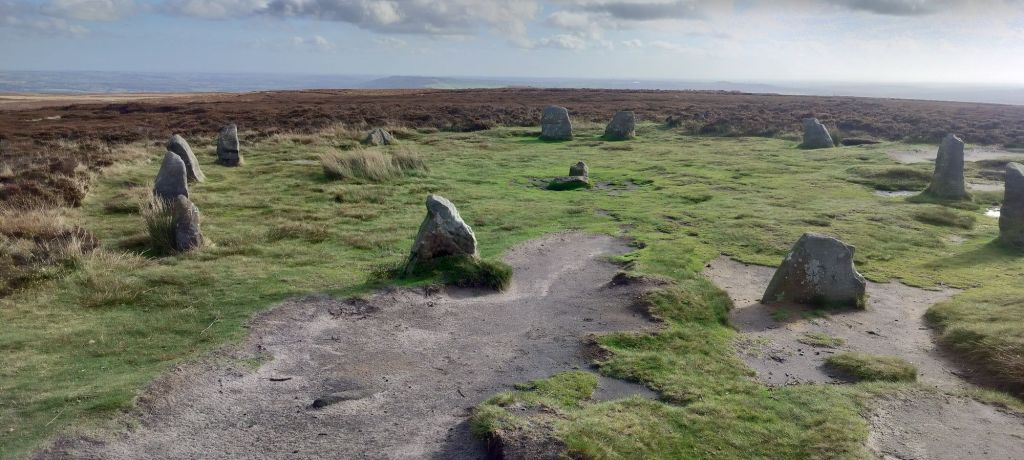
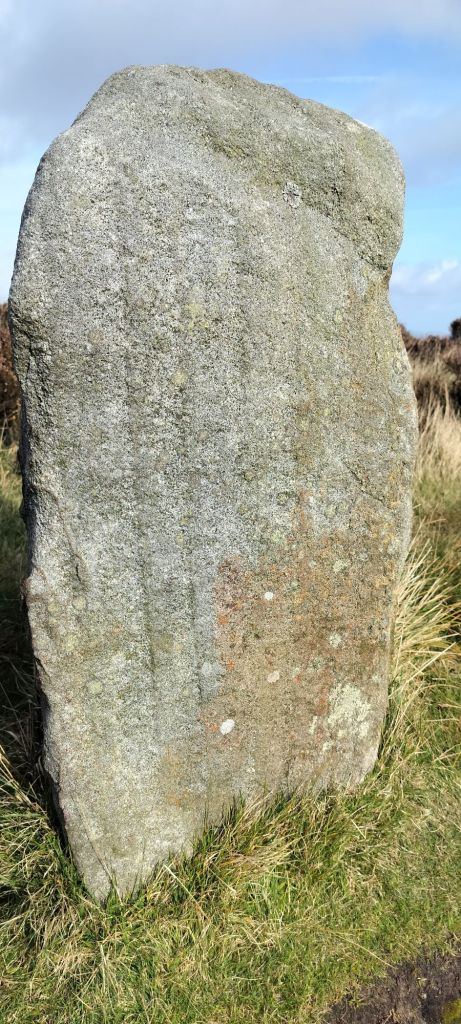
These stones range from about four feet tall to considerably shorter. Some have been marked with what appear to be drawings, and the stones may have served a variety of purposes. One gets a sense of the site’s sacred significance, a place where people may have gathered at particular times of the year, much like at the far larger and older sites found farther south on Salisbury Plain.
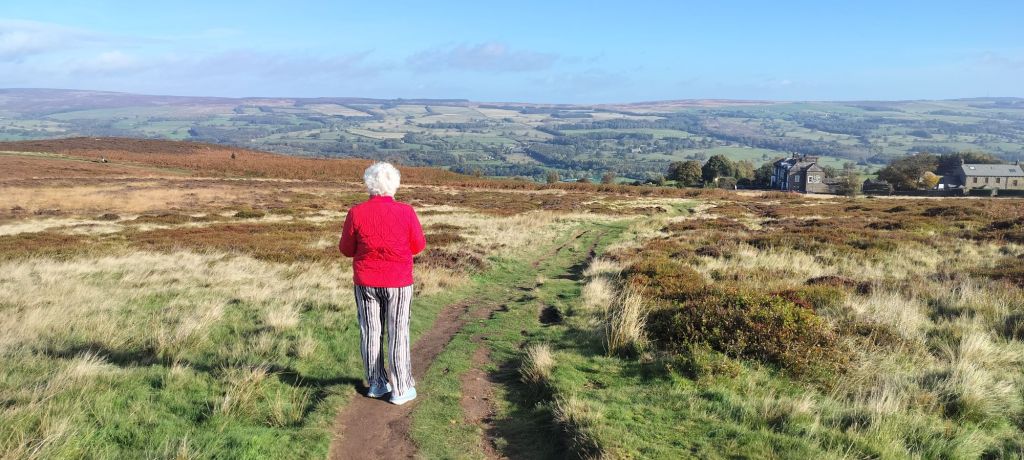
The site has been known as the Twelve Apostles only relatively recently. Previously, it was known as the Ring Cairn, the Burley Moor Circle, or, in a more romanticized eighteenth-century description, the Druid’s Dial. Of all the places I visited, this was by far the most remote, accessed by public footpaths.
The Devil’s Arrows
The Devil’s Arrows are located near the village of Boroughbridge. One huge standing stone sits alongside a road, while another two stand in a farmer’s field. These are among the tallest surviving prehistoric standing stones in Britain, arranged in a row and dating to the Neolithic period.
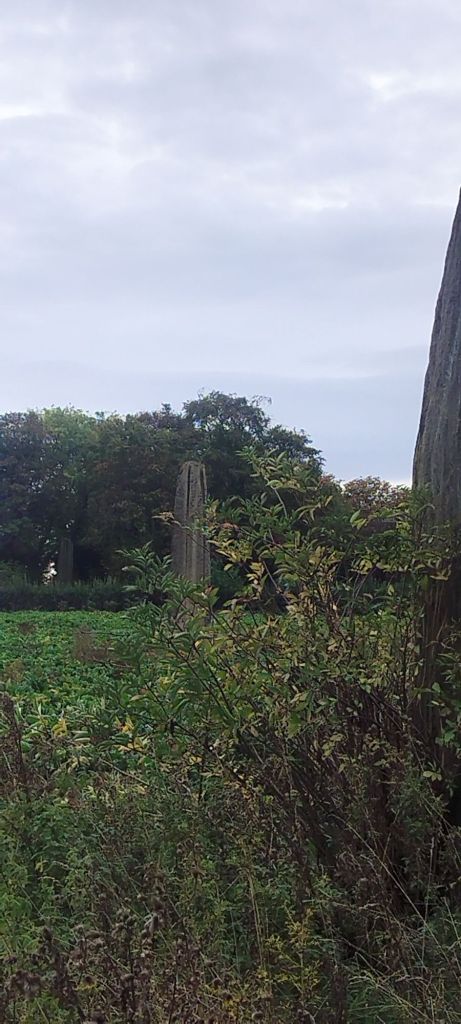
These 25-ton stones stand about 23 feet above ground, with approximately six feet of each stone buried below the surface. They were transported more than ten miles from an area near Plumpton Rocks and erected sometime between 2700 and 2000 BCE, well within the Neolithic period.
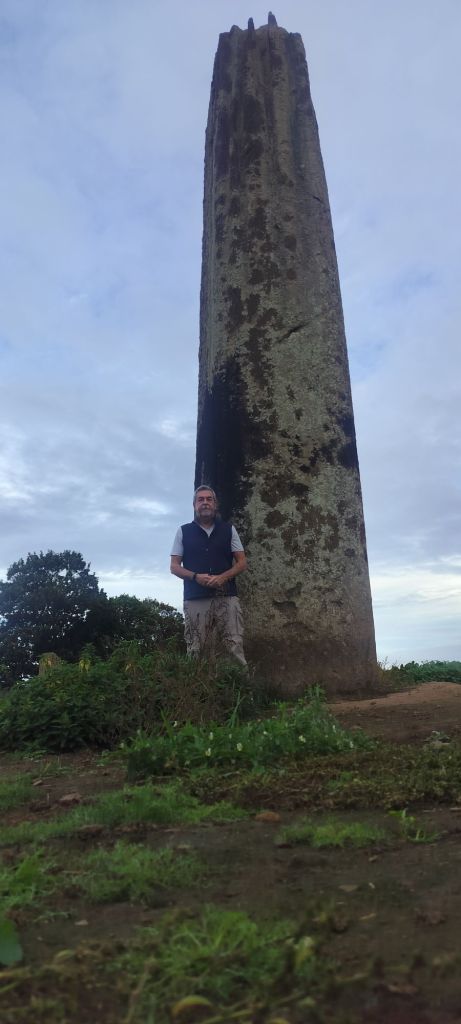
Ancient people moved these enormous stones and planted them here. It’s crazy to think about it! There were probably more stones originally, but these three remain, their surfaces gouged and weathered by thousands of years of rain and wind.
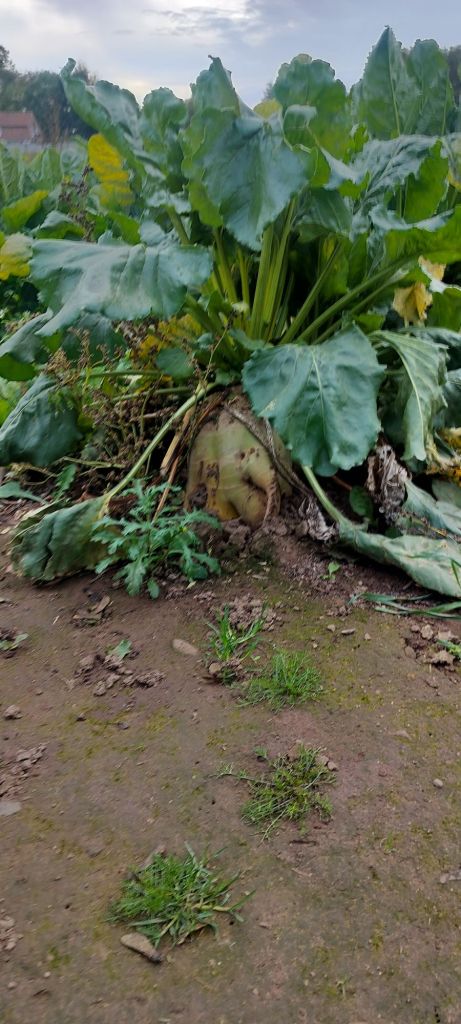
The two stones located in a farmer’s field were surrounded by some ridiculously oversized root vegetables. I half expected one to be pulled from the ground and start screaming like Professor Pomona Sprout’s mandrakes in Harry Potter.
Thornborough Henges
Twenty minutes’ drive from the Devil’s Arrows is an impressive henge site known as the Thornborough Henges. A henge is an earthwork enclosure, typically circular, surrounded by a ditch and an outer bank, with entrances through the enclosure. Think of Stonehenge without the stones.
What makes this location unique is that there are three henges arranged in a line—well, mostly a line, as there is a slight bend—stretching for more than a mile.
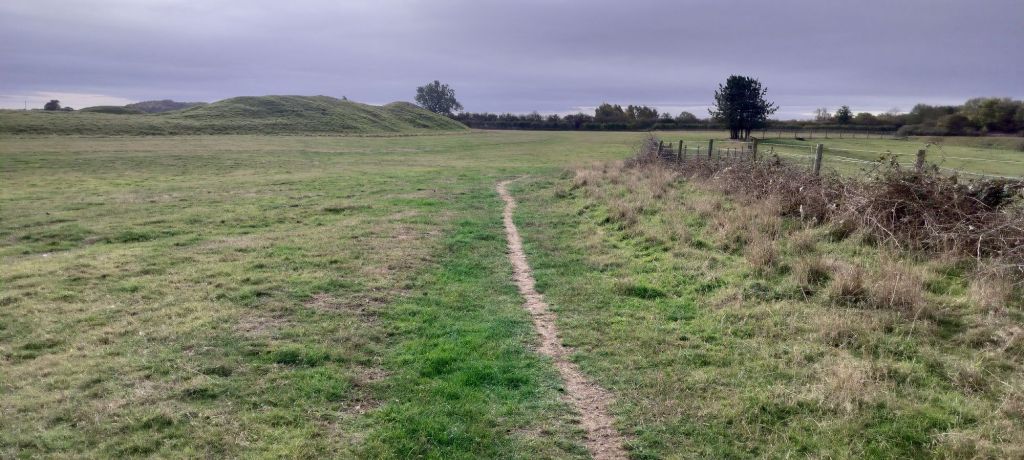
These earthworks were created by people during the Neolithic period, using tools such as deer-antler picks to dig and move enormous quantities of earth. The banks were once coated with white chalk, a resource prevalent in the area.
The northern henge is covered with a copse of trees and, I’m told, is the most impressive, with its banks still quite pronounced. However, I couldn’t verify this for myself because the surrounding fields were posted with signs prohibiting access. The central and southern henges were quite impressive in their own right, with substantial earthworks and indentations that would probably be much easier to appreciate from the air. I think I need to get a drone!
My photos were pretty much unimpressive, so for now, I’ll have to settle for sharing what was detailed on an information sign at the site.
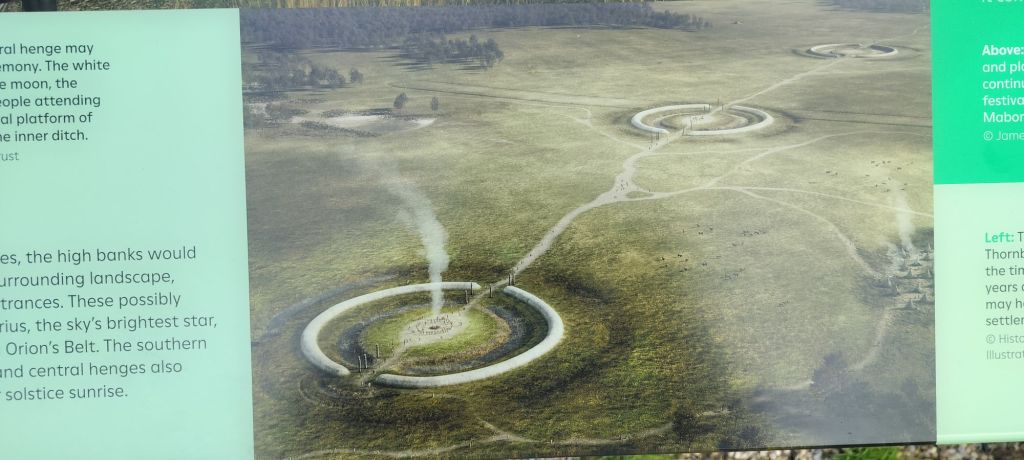
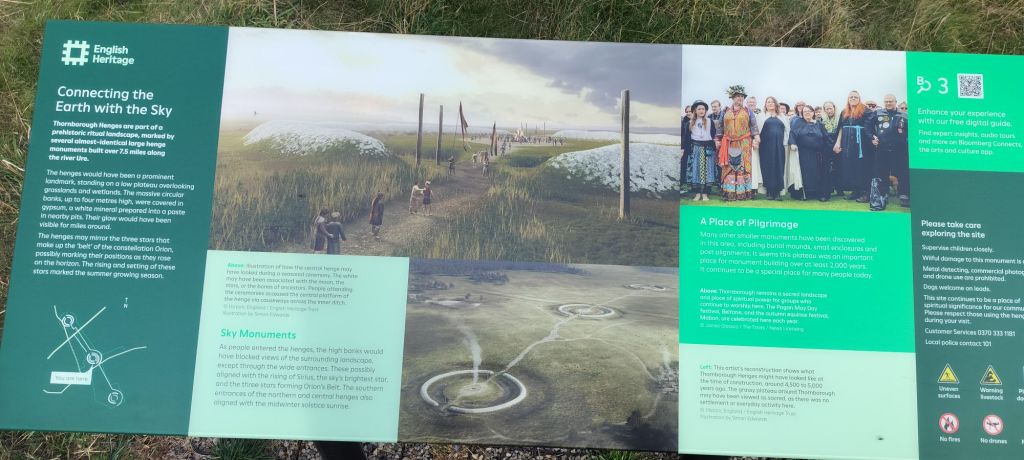
Clearly, this was another place of significance, one whose purpose and use changed over the centuries. Much of its history remains speculative. Was it a temple? A holy place? A place of trade and commerce? Perhaps it served several purposes over time.
It truly was impressive to stand there and contemplate the sheer amount of work involved. People without our machinery, our technology, or our modern conveniences undertook an enormous project, leaving a landscape that we can still visit thousands of years later.
Druid Temple
My last site was Druid Temple, located near Masham on the Swinton Estate. The website states, “Not a great deal is known about the construction of the folly, but it is believed to have been built in the late 1700s by William Danby.”
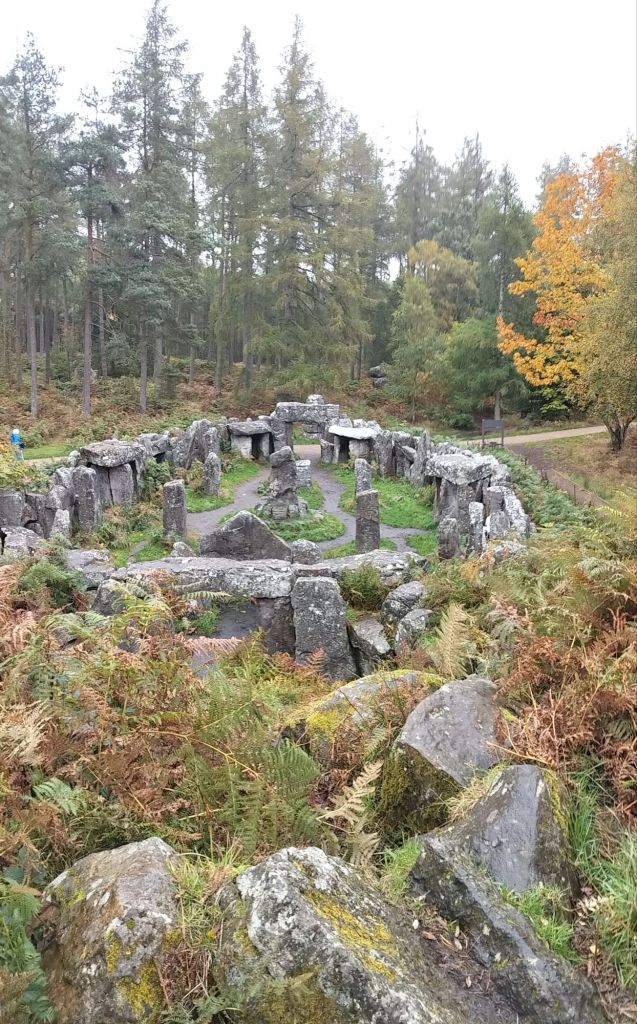
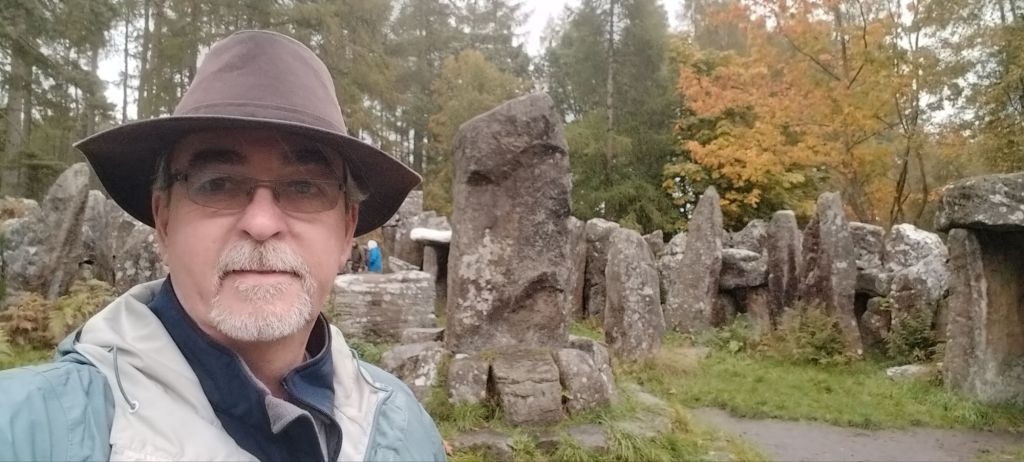
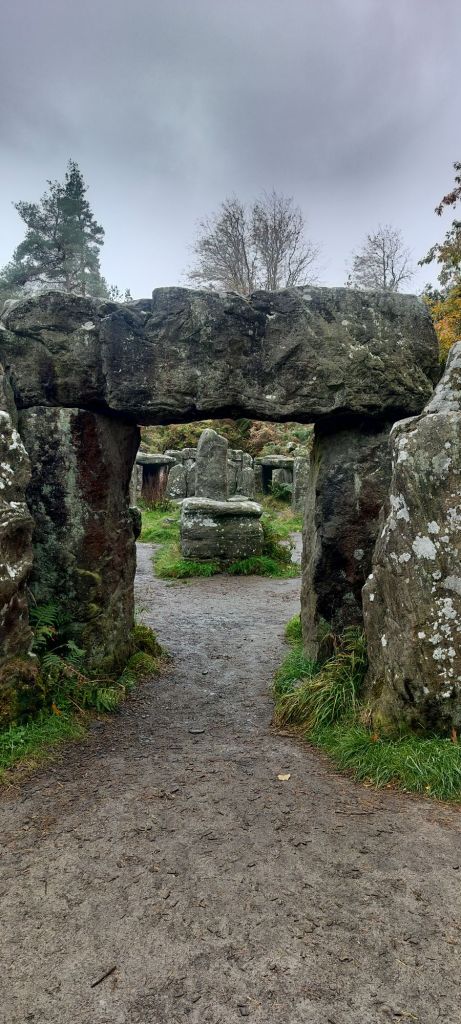
There is quite a bit of conjecture surrounding its origins. There was considerable interest in all things Druid at the time, and local folklore suggests that the building was intended to provide work for local stonemasons during a period of economic depression.
One story tells of how, after the temple was completed, the landowner hired a hermit to live on the property, only for the hermit eventually to go mad and have to leave.
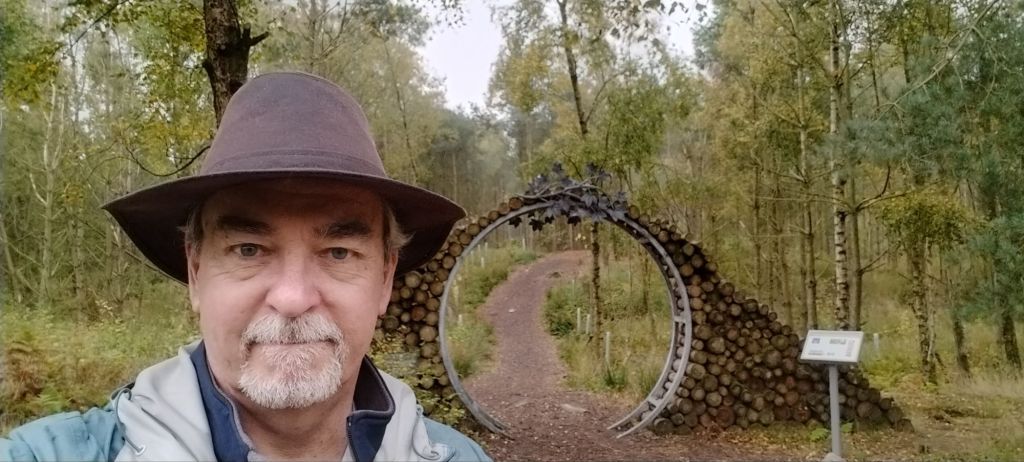
I don’t know whether any of these stories are true. The woodland surrounding the temple is worth a visit in its own right. The stones at Druid Temple were sizable, and the folly itself was perhaps more complex than the other sites. Yet I couldn’t help comparing it with the much older monuments I’d visited. The stones of the Devil’s Arrows were enormous, weighing some 25 tons each, and had been transported considerable distances. The stones of the Twelve Apostles were smaller, yet they had stood on that windswept hillside for thousands of years. The Druid Temple, by comparison, seemed less impressive—not because it lacked charm, but because I knew it was a relatively recent creation.
How did people thousands of years ago dig out enormous henges, move massive stones, and shape the landscape with tools so simple by our standards? And how have these places survived, in one form or another, for so long?
A Few Other Side Adventures
I was also able to squeeze in some other visits to ancient places on Friday. Jacki and I lived in Harrogate for five years, and the closest cathedral to us at that time was in Ripon. Yet I never visited it before Friday.
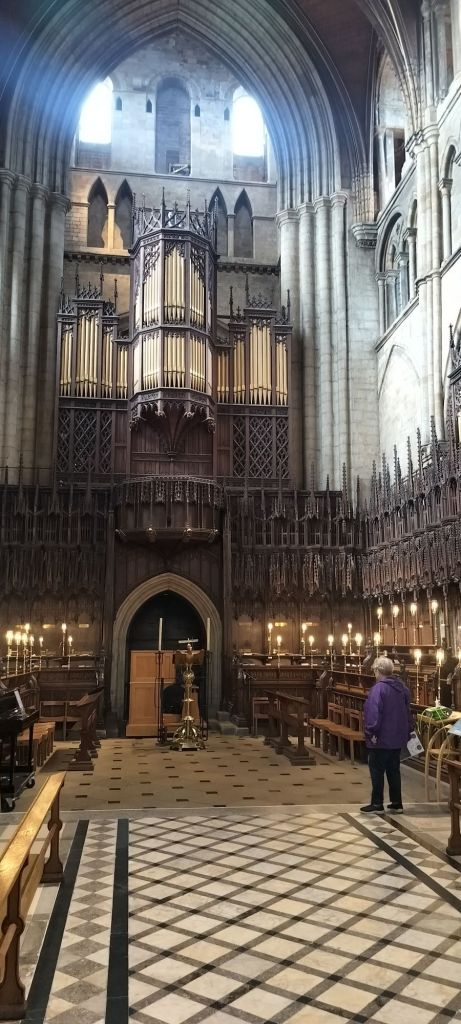
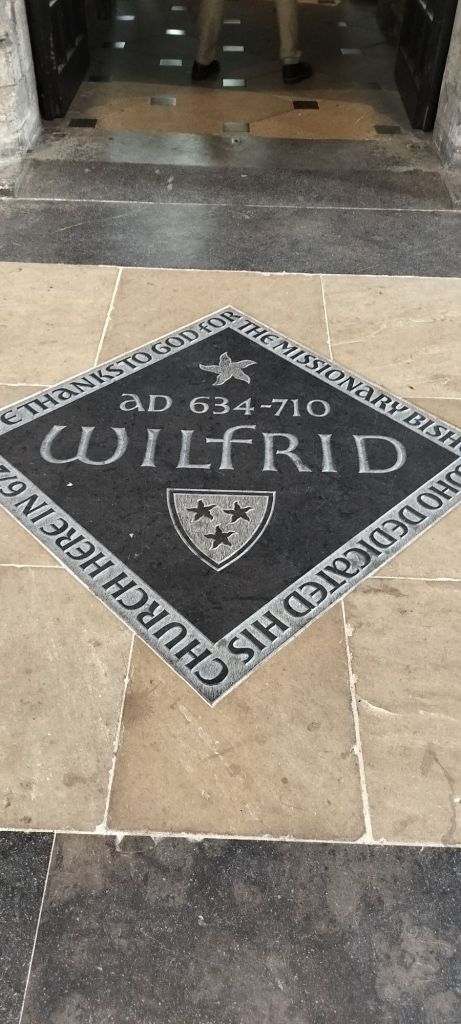
The Christian community at Ripon was founded by St. Wilfrid, the city’s patron saint, in 672 CE. Ripon Cathedral has been a place of Christian worship for more than 1,350 years, making it one of England’s oldest Christian sites. Its present building reflects centuries of rebuilding and change, yet deep beneath it lies an extraordinary survivor: the original Anglo-Saxon crypt, still used for prayer today. Standing in a place like this, one is reminded that the history of a building is not simply the story of its stones, but of the generations who have gathered there. I was particularly grateful for an organ concert that was taking place when I arrived.
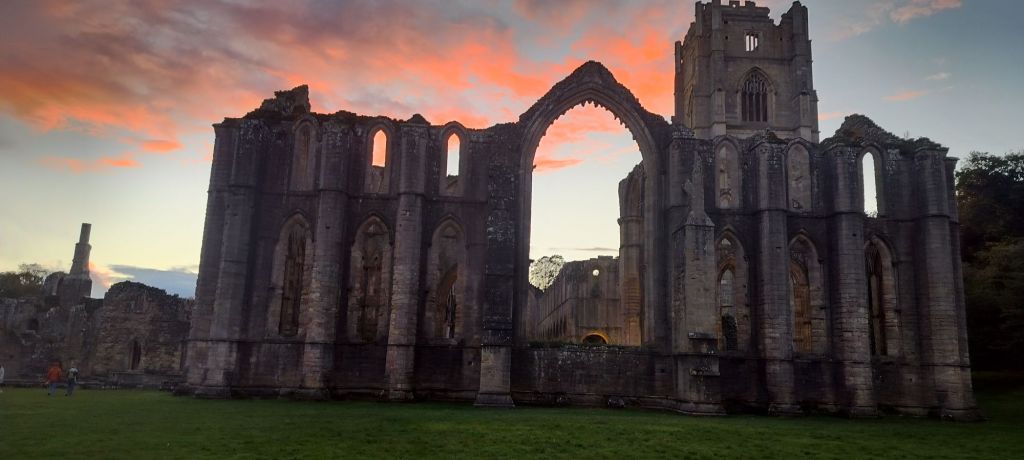
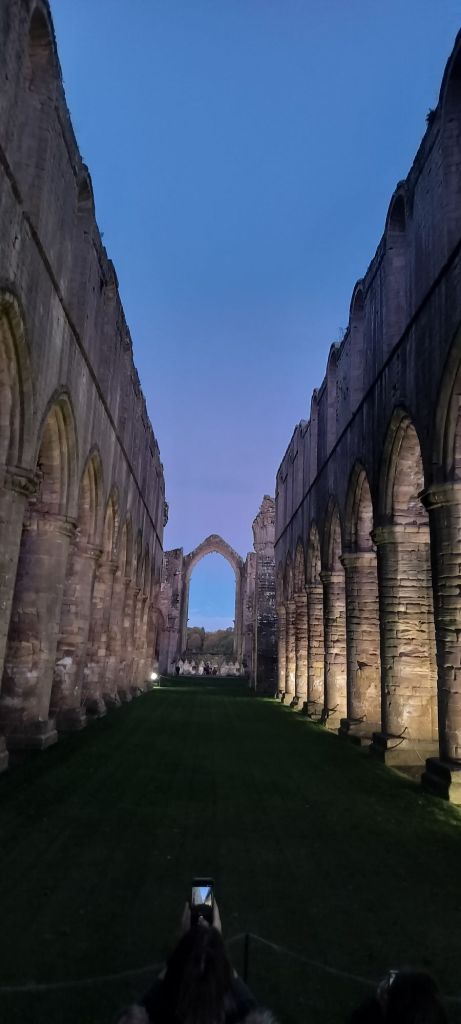
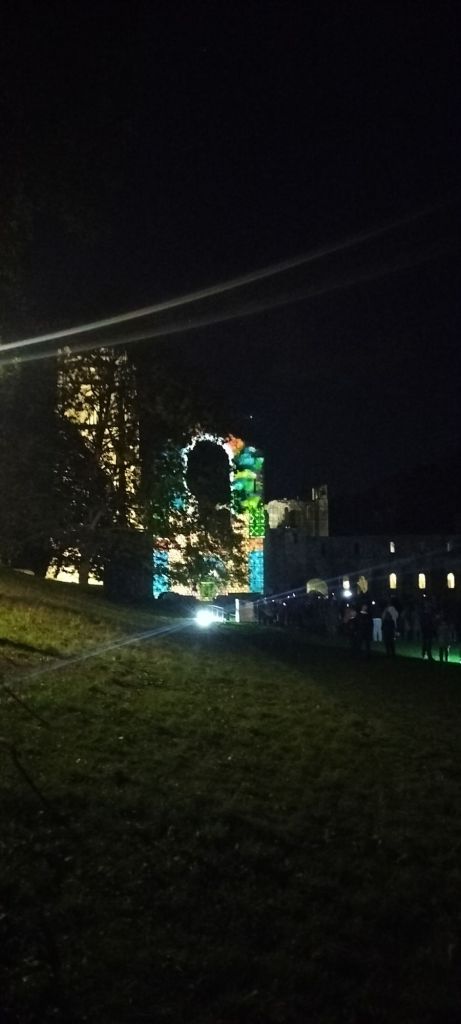
Fountains Abbey is one of my favorite places to visit when we come to Yorkshire. It has a long history that came to an end with the dissolution of the monasteries under Henry VIII. Fountains was dissolved, while Ripon Cathedral survived. Today, only foundations and walls without roofs remain at the abbey.
We booked a special event held each autumn called the Illuminations. Choral groups perform, monk-like chants can be heard over speakers in other parts of the abbey ruins, and a contemporary light show is projected onto the former entrance to the abbey church’s nave. The abbey’s 900-year history is brought to life, retelling the story of the site in a way that makes its past feel remarkably present.
Along the Borderlands: Romans and Monks
Today, Sunday, Jacki and I were driving through the country known as the Scottish Borders. We chose this route partly because I didn’t want to pay the toll for the tunnel under the River Tyne. The route through the countryside would take about the same amount of time, so why not?
About an hour into our drive along the back roads, we happened upon a coffee house near Hadrian’s Wall. Figuring this was providence, we stopped for a break and looked up the nearest section of the wall. It turned out to be only a three-mile detour.
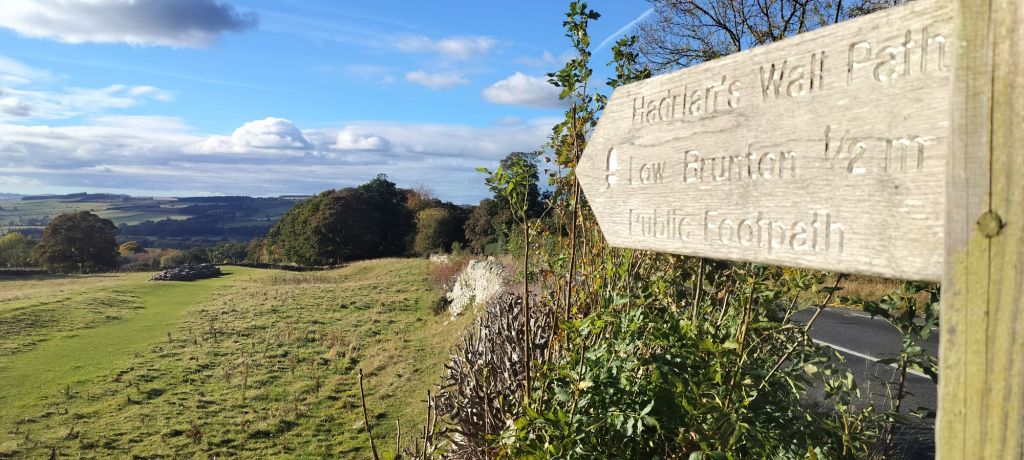
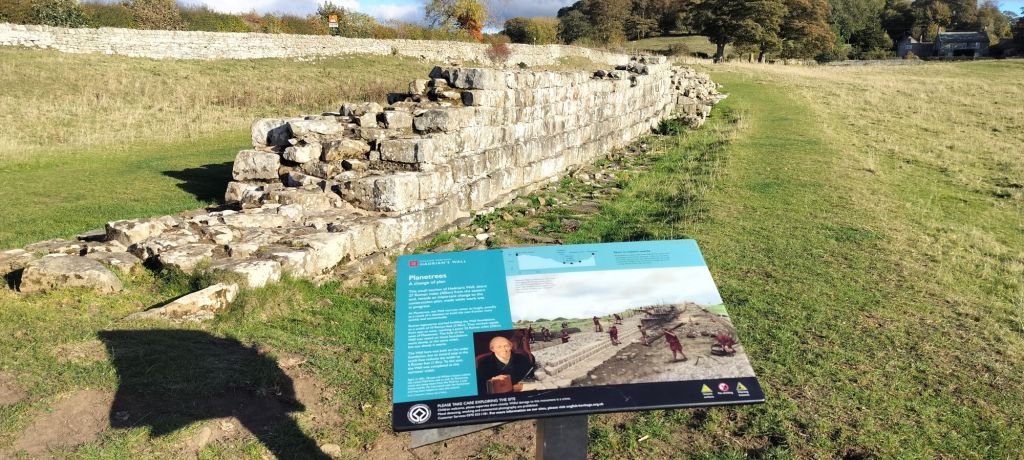
Hadrian’s Wall was begun in 122 CE, during the reign of Emperor Hadrian. It marked the northern frontier of the Roman Empire in Britain, helping the Romans control movement across the border and regulate contact and trade with the peoples to the north. It was an extraordinary undertaking, stretching across the landscape for roughly 73 miles.
Centuries later, Christian monastic communities would take root in these same borderlands. I had the opportunity to visit the ruins of two such communities, Jedburgh Abbey and Dryburgh Abbey. Although both were closed to visitors when we arrived, I could still appreciate something of their scale and setting from outside the fences. These communities grew into substantial religious centers, with great churches, chapter houses, and cloisters.
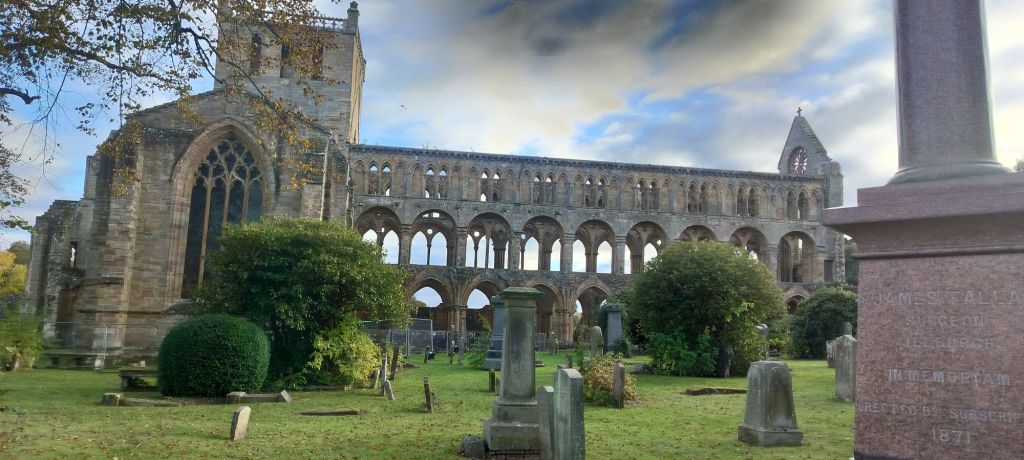
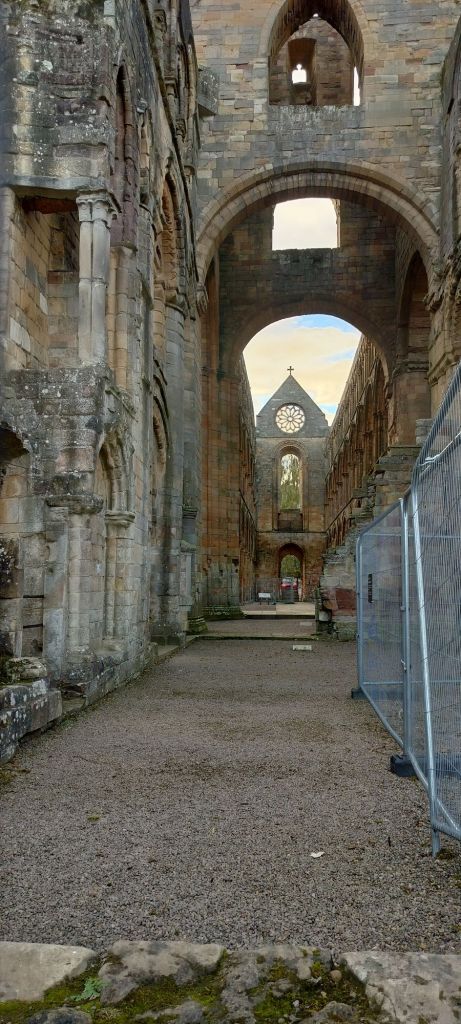
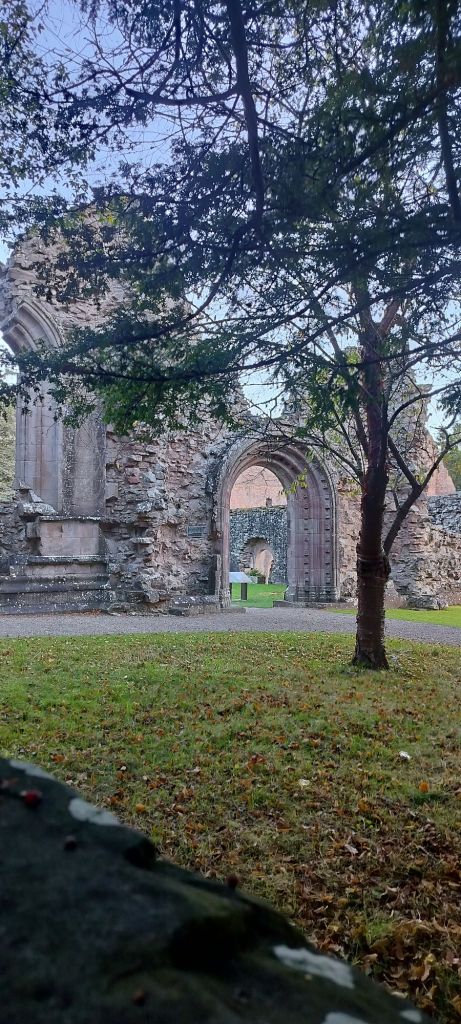
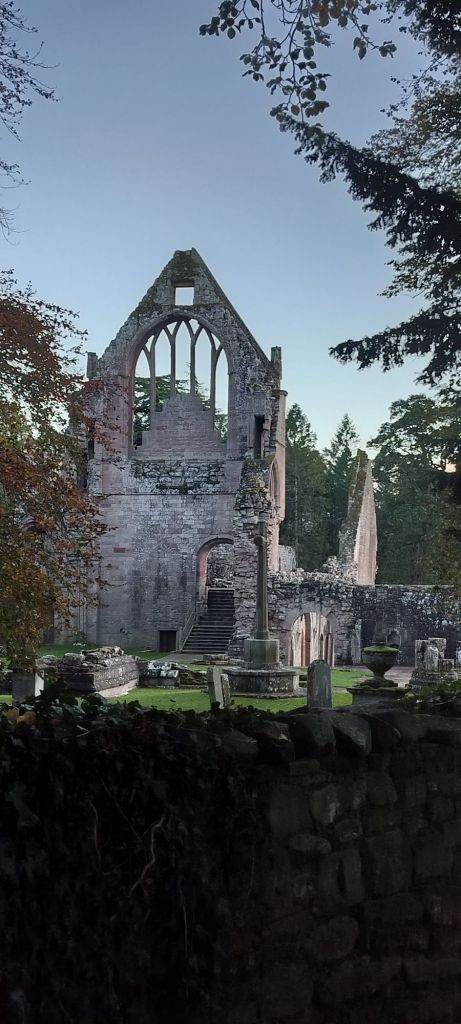
I found myself struck by the contrast. The Romans built a wall to mark their frontier and help control movement across it. The monks, meanwhile, established communities beyond Hadrian’s Wall, among the people of these borderlands, building places of worship and learning despite the challenges of the landscape and the times in which they lived.
Two very different worlds. Two very different purposes. And both left their mark on a landscape that continues to invite our curiosity nearly two thousand years later.
As I look back over the week, I realize how much I still don’t know about the people who built these places. I can stand among their stones, walk the earthworks they shaped, and wander through the ruins of their great religious communities, yet their lives remain largely hidden from me. I can only imagine what they believed, what they hoped for, and what compelled them to undertake such extraordinary work. The stones remain, even when the stories of the people who placed them there have been lost. And perhaps that’s part of the adventure: to keep exploring, keep asking questions, and remain curious about the people who came before us. There are still so many places to discover.


Leave a Reply